Happy New Year

IMG_3740

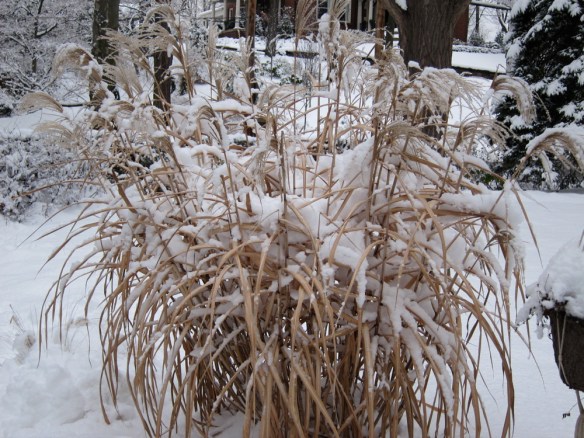
Snow in front of Steve’s house.

I don’t make resolutions any more. I figure if I haven’t gotten it nailed by now, it’s too late. The week between Christmas and New Year’s was more than a little disorganized, with house guests and such. I’m trying to get back on schedule. Yesterday I actually got to the club to exercise. Now I just have to stop eating all the sweets.

I am planning my next trip to Japan, which will begin in the middle of March and go on for six weeks. My previous visits were in Autumn; now I want to see Spring. I will spend three weeks traveling and most of the remaining three weeks in Kyoto. I have plane tickets and reservations in a hotel in Tokyo and in my favorite place in Kyoto. I will post my plans as they take shape and use this blog for my posts from Japan instead of going back to the other one.

Since my frequent flier account grew as I purchased things for my new apartment I will be flying business class both ways. I don’t think my old bones would tolerate another long trip in coach. I will spend the first five nights in Tokyo looking at gardens and making a day-trip to Ibaraki where there is a garden that is listed in the “top three.” I’ve seen the other two and will return to one of them that I probably did not properly appreciate.

I am reading about one of the gardens I visited in Kyoto: Tenryu-ji. The book is an appreciation of the spirit of the garden, the pond and its rocky landscape. I missed it when I was there in 2008; there were too many people and I looked for less crowded spaces.

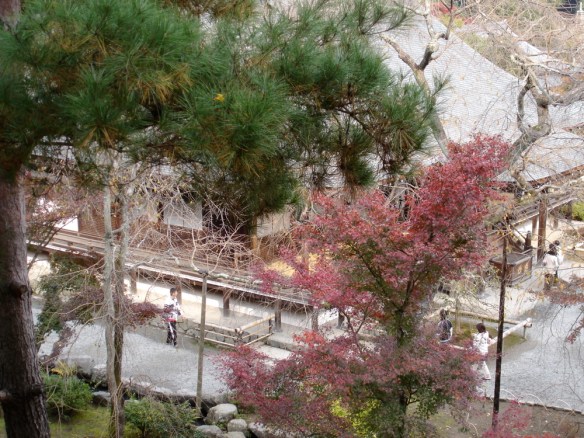
By this time the crowds had gathered and my experience at Tenryuji Temple was not so profound. It’s a very large garden with the main temple building in the center. It’s also on different levels; there was a lot of climbing involved, which I am proud to report I did. As I began climbing the crowds diminished, inspiring me to continue climbing so I could sit and enjoy the view without too much interruption.

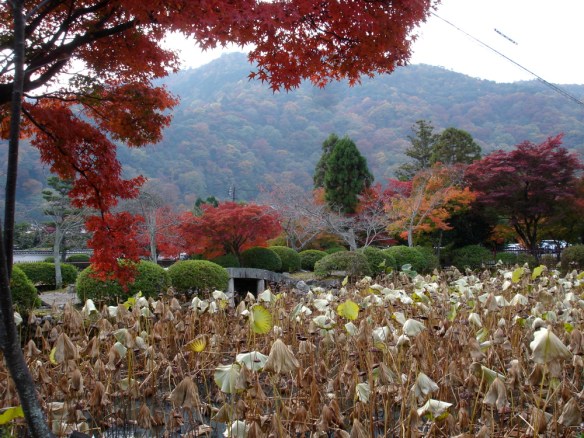
Pond with lotus plants

Pond with lotus plants

DSC00081

View from above, where I sat and contemplated. The angle of view makes it almost look like a Japanese print

Wisconsin

The sky was overcast with a slight drizzle all the way up here. That’s ideal for a long drive; no sun in the eyes, no huge downpour to cope with. We stopped at the Kohler Arts Center in Sheboygan and saw three interesting shows. The drawing show and Carol Prusa show were both wonderful, but I particularly loved Emery Blagdon. He made what is frequently termed “outsider” or “”visionary” art: creations which come from the soul made by someone with no training who probably never terms them art or thinks of himself or herself as an artist. I would love to go around the world looking at this kind of art.

After another stop for ice cream we arrived in Sturgeon Bay where Anita and Kathy were waiting for us and we will spend the week. I am sitting and writing and looking out at Lake Michigan and listening to the waves coming ashore. Lake Michigan could be an ocean; there are no other shorelines in sight. I saw it when I drove into Chicago and followed it several hundred miles to get up here.

Yesterday we actually did some work. Sandy taught us about image transfer. Most of her techniques involved laser prints. I want to do it with inkjet prints and still haven’t found a satisfactory method. We have one more technique to try today.

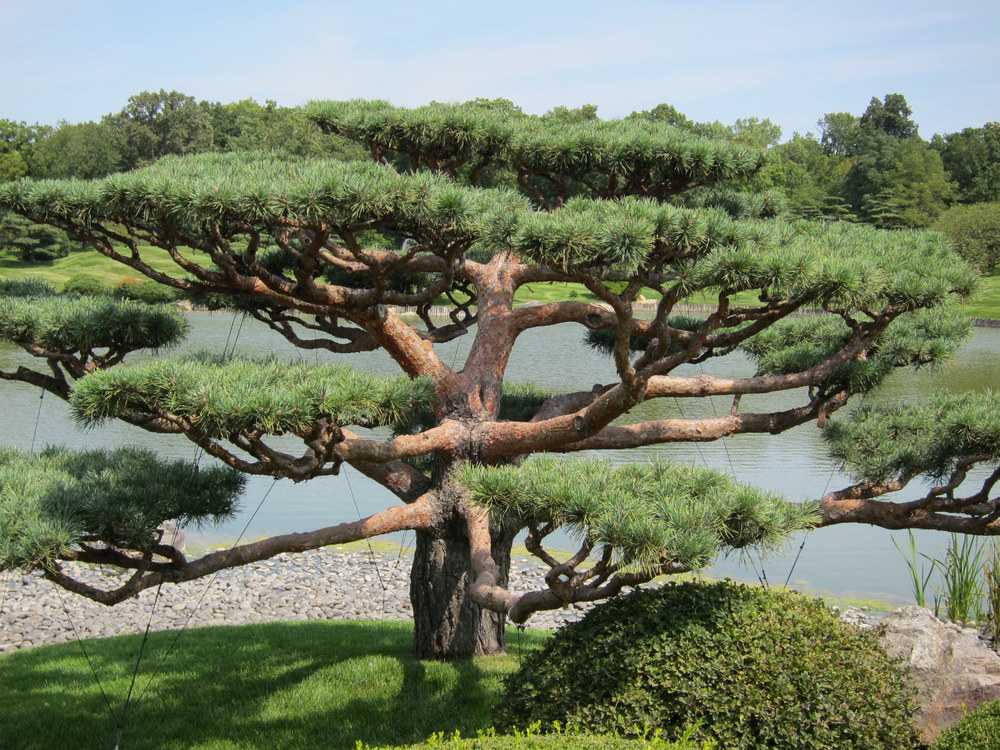
I have taken lots of photos and can’t properly sort and handle them until I return to Pittsburgh. Here is one I took in the botanic garden just outside of Chicago.

Pittsburgh is Beautiful in Spring

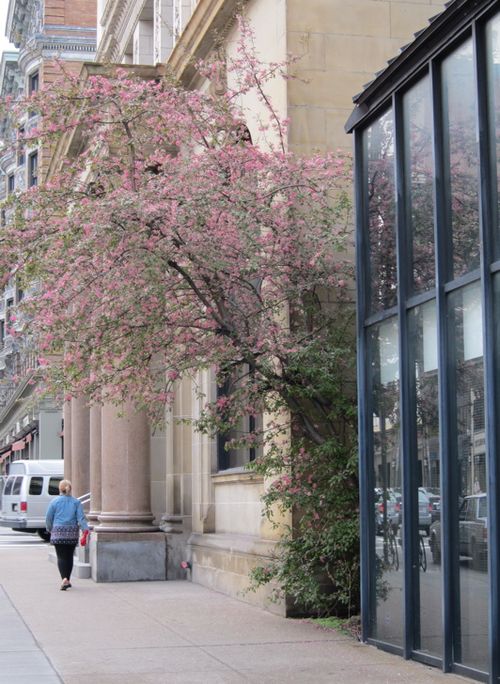
Everywhere you look the trees are blooming and there are lots of spring flowers. Here is a tree bursting out from a tiny patch of dirt between two buildings on a street with blocks of nothing but buildings.

IMG_2218
I took this on the way to the oral surgeon. I am better, but not good. This is my sixth day of the antibiotic. My past experience has always been that two days brought great improvement. I had only a little after three days. He thinks he should remove the implant and that will clear up the infection. Then we'll try again. I hate to do it, but I'll probably go along with that. Nasty, nasty.

For some time now, I have thought about making portraits of trees. Here is my first one: in my backyard, the shadow cast by the tree in the next yard.

IMG_2198

Japan Itinerary and a volcano

I've been trying to plan my trip. On the second day I thought I would go to Mito, in Ibaraki to see one of the three noted gardens, which has a plum blossom festival in March. It can be a day trip from Tokyo.

Then I thought about getting on the train the next day and going to Kagoshima, at the bottom of Kyushu. Both places are supposed to be warm, which is what's tempting me. Yesterday morning I was greeted with the news of a volcano erupting in Kagoshima. It's a Mt. St. Helens type volcano, so lots of ash, no lava. Evidently ash has covered an area 5 km. around the volcano, and scientists expect the eruptions to continue for a year.

I hadn't planned to go to the volcano, but to several places nearby. I guess this will have to be a last minute decision.

One dream, big plans

The sun rose at 7:44 this morning. The radio began talking to me at 6:59. I hate getting up in the dark, so I didn't. The radio told me it was 22 degrees out and wasn't likely to get warmer. I burrowed deeper into the covers and went back to sleep. The radio stopped talking to me at 7:59. I had a vivid dream about Marcia, a long-time friend who finally pushed the boundaries of friendship too far, and whom I haven't seen for seven or eight years. In that time, I moved to Pittsburgh and her studio in Chicago was emptied and sold. I don't know what happened to her; sometimes it makes me very sad. It's hard to lose a friend, even when the friendship had become onerous.

On a happier note: I am planning my next trip to Japan. I will leave Pittsburgh on March 22 and return on May 7. Six weeks ought to be long enough to satisfy my Japanese garden obsession, I hope.

Finally — THE PAPER

I was determined to have it posted before the end of the year, so, I'm feeling very pleased with myself. I made the first round of revisions, suggested by Steve, and I'm much happier with what I've done. I really needed his help. You can download the paper, as a PDF file under my picture in the sidebar.  Or, you can see it online at a new blog I've started on WordPress. Visit it here. I'll be using that blog from time to time and let you know about it here.

Exercise–body and mind

I just returned from the second half of my exercise program. When I went yesterday I started to get a twinge in that bad muscle as I got halfway through the treadmill portion. I managed 10 minutes on the rowing machine then did my upper body exercises and went home. I didn't want another three days of limping. Today I finished the treadmill, the elliptical and the leg machine exercises. Wednesday I'll go back to the whole routine.

Steve read my paper yesterday and made some really helpful suggestions, so I've spent most of the day making revisions. I just have a little more to do, but this is my low time of day so it may not get done until tomorrow morning.

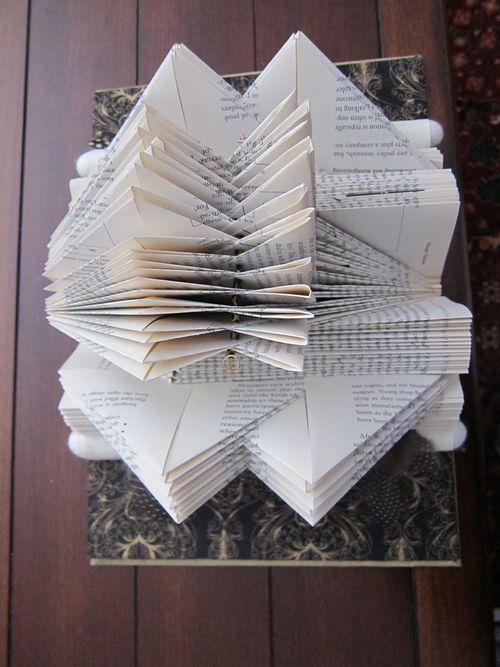
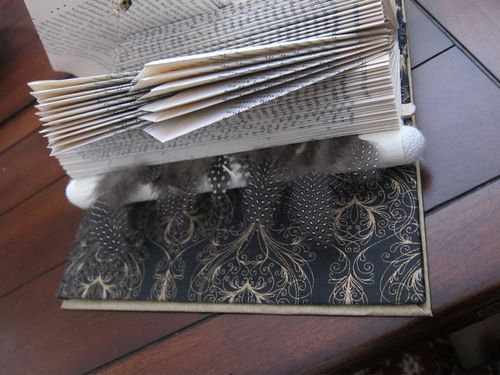
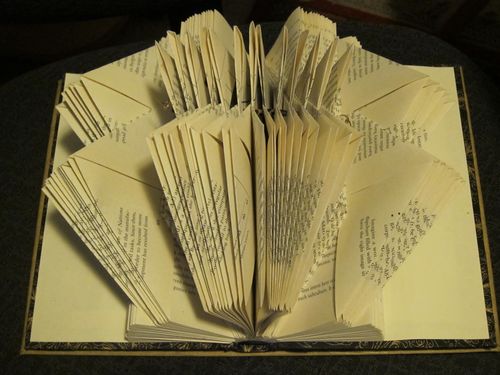
Here is a picture of the finished folded book, along with a detail. I don't love it, but I love the idea. I'll try again.

IMG_1933
IMG_1935
I curled the end papers, capped them with empty silkworm cocoons, fastened them down with bone beads and glued feathers over the scroll shape. Cocoons and feathers were supplied at the workshop. The workshop teacher did some elaborate embellishments, but I guess I'm more into form.


Phipps Conservatory

Phipps is one of my favorite places in Pittsburgh, second only to the tunnel under the convention center. They are open until 10 at night every night this month (Christmas excepted, I think). Last night Robin, Steve, Charna and I went to see what it looked like. We were charmed. I took a few pictures, but I want to return, alone for better picture taking, at dusk. I'd like a little outside light with all the other lights.

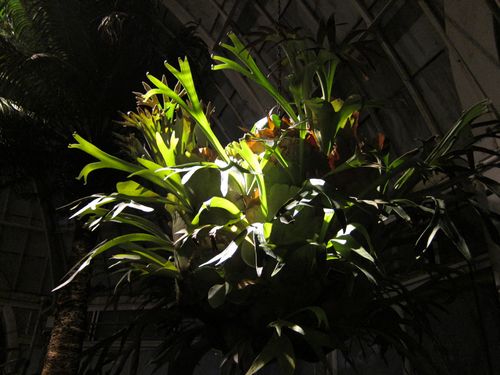
Some of the areas were a little spooky. There weren't many other people and it was very quiet. Here is a staghorn fern. (I think it would benefit from a little adjusting in Photoshop. Maybe tomorrow.)

IMG_1878
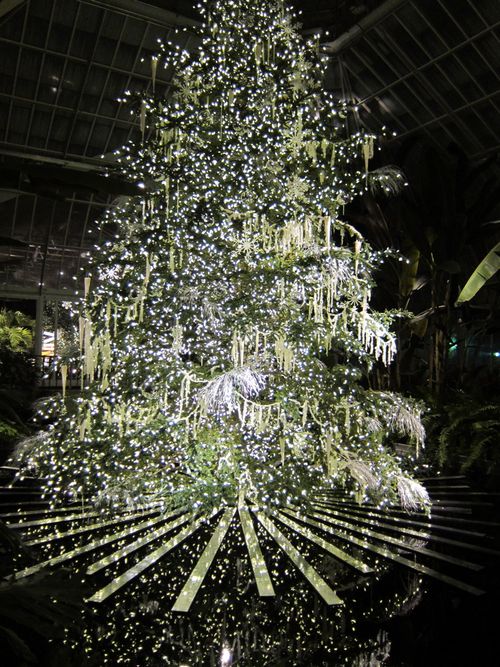
This huge tree is amazingly beautiful. My photo doesn't do it justice.

IMG_1885

Most of the rooms had holiday displays; this one is entirely devoted to the holiday.

IMG_1887
IMG_1888
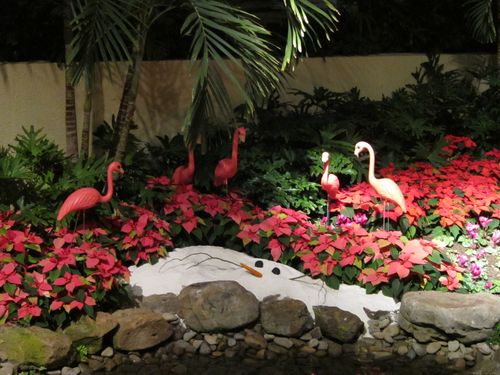
With just a little Pittsburgh kitsch. That's a melting snowman in front of the plastic flamingos.

You can take an online tour of Phipps here, and read about their trip to India to prepare for the next tropical forest exhibit. 

Term paper, Folded books and a gigapixel conference

Yes, Mage, it was a very busy week. While I was in New York last summer, I heard about an exhibition of artist books to be held at MOMA's PS1 on November 5 and 6. I planned to go, but finally decided I didn't have the time. Instead, I signed up for two book-making workshops here. One of them took place on the past two Wednesday evenings and was about folding and  embellishing books. Here is my folded book, not yet embellished. I work slowly.

IMG_1833
This book was particularly satisfying to fold. It was a text from a class I took while I was working on that master's degree on corporate communication. I wanted to sell the book back to the school bookstore, but they would only give me $1 so I kept it.

I began the week working on my term paper. We were each supposed to give a ten minute talk about our projects. I spent Sunday, Monday and Tuesday morning trying to figure out exactly what I would say. I wasn't even sure I would be called on, but I wanted to be prepared. Being an auditor is an uncertain life. We only got through about half of the class last week and I will be called on Tuesday. I'll append my notes at the bottom of this post.

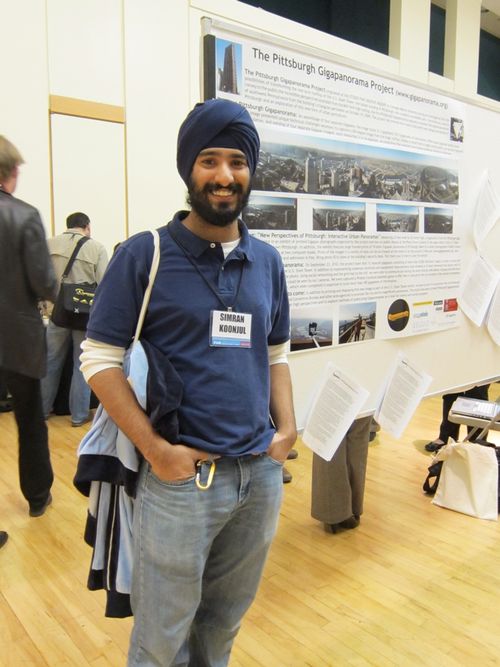
I alternated work on the term paper with work on the poster for the gigapan conference. David kept finding typos and adjustments; I kept making the changes. The conference took place Thursday evening, Friday and Saturday. I am amazed at all the uses for gigapixel imagery–showing detail in microscopic images and detail in huge panoramas. You can see the papers here and some of the gigapans from the conference here. I think they will also post the talks. Tomorrow I am supposed to begin work on the new gigapan we shot last month (along with the term paper and Thanksgiving preparations). Here are David and Simram, another member of our team, in front of our poster.

IMG_1829
IMG_1830
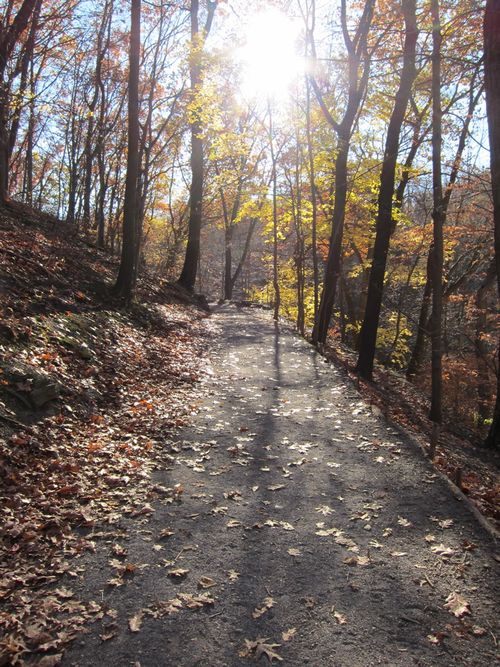
I continued going to my Osher classes, along with all of this, and on Thursday, managed to get in another quick walk in Frick Park.

IMG_1823
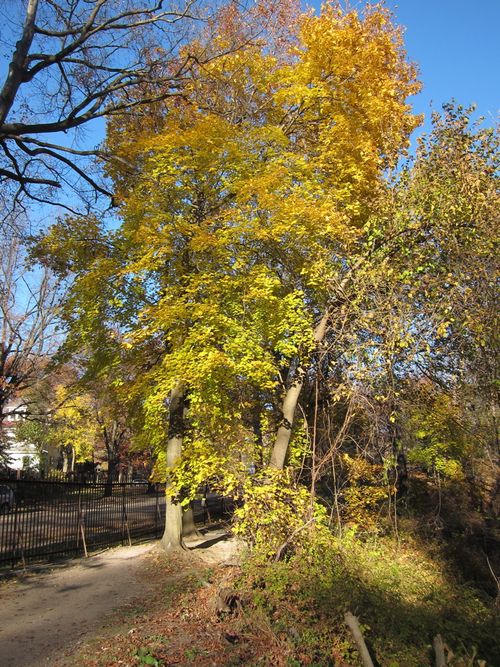
The weather has been cooler, but still sunny and most of the trees still have their leaves.
IMG_1826
Needless to say, my house looks like it's been trashed. So I'm off to the club to exercise, then back here to clean.

Notes for term paper presentation

In fall, 2008, I was in Japan looking at gardens for more than a month. Most of the gardens were in Kyoto, but I traveled to Tokyo, Nikko, Kanazawa, Nagoya, and Okayama. Most Japanese gardens use the same elements, yet each one is unique; each one has its own design and arrangement of space; most have great appeal for me, a few left me wondering why I had bothered to come to them. Allowing for some days of fatigue and the fact that winter was nearing, I still did not understand why some of those gardens had little appeal for me. This paper is an attempt to examine the elements of a Japanese garden to determine what made the difference.

I will look at two types of gardens: those viewed from within a room or a veranda, and scroll gardens, which promote interactive viewing, each few steps presenting a different view, much like walking through a museum and stopping to examine and appreciate each picture.

The elements of a Japanese garden are greenery, water, rocks, stone lanterns and bridges. Design of a garden is governed by use of space, illusion/shakkei or captured scenery, management of vegetation and growth, and an invocation of famous places, usually in spirit or in some abstract fashion.

I will consider how each of the elements is used in a garden and some of the history of that use, beginning with rocks, which are considered the most important element by the Sakutei, the eleventh century gardening manual. Further, I will show how the use of space and illusion intensify the experience of the connection with nature for the occupants of the house.

Painters, particularly emaki painters, designed many early gardens, creating a “conceived” work of art that combines a gardener’s sense of composition with the idea of scenery “borrowed” from nature. To view the garden from within a house is very much like viewing a scroll painting. To walk through a stroll garden each new view could be another part of the scroll. I did my best to frame each of these views within the viewfinder of my camera.

In addition to a general consideration of the Japanese garden, I propose to examine Kenroku-en in Kanazawa, Koraku-en in Okayama, Sankien in Yokohama and Shirotori in Nagoya and two gardens meant to be viewed from within a building, Chishakuin and  Nanzen-in, in Kyoto, using maps and my own photographs for reference.

In conclusion, I propose to illustrate how the use of space in each garden made a difference to my feelings about it.


Working on my term paper

I struggled for two weeks to restate the goal of my project, following the  professor's comments. I sort of knew what I wanted, but I didn't know where I was going with it. Finally turned in this statement:

Japanese Gardens are the subject of poetry; poems are created and read in gardens. They appear as backgrounds in scroll paintings, and emaki painters designed many of the earliest gardens. Japanese gardens grew out of reverence for nature, but trees and plantings are shaped to conform to a Japanese ideal of nature, making gardens a true art form. In some, the viewer can appreciate the scene from a special place, a frame, in others the viewer can be more interactive, he or she can enter and stroll along, each few steps presenting a different view, much like walking through a museum and stopping to examine and appreciate each picture.

 Rocks, water, stone lanterns and decorative bridges, sometimes a tea house, and plants are the elements of a Japanese garden. In addition, the two concepts: illusion/shakkei or captured scenery, and replication of famous places, are often used to organize the garden space. I will explore the use of those elements and ideas to create aesthetically pleasing spaces. Then, using maps and photographs I propose to examine Kenroku-en in Kanazawa, Koraku-en in Okayama, and Shirotori in Nagoya and two gardens meant to be viewed from within a building, Chishakuin and  Nanzen-in, to determine what constitutes an aesthetically pleasing space for me.

Now I have to begin writing the paper. I have several free hours after my Osher music class this morning, then lunch, then just missed the bus so walked a mile or so instead of just waiting for the next one. Of course, a cup of tea was necessary as soon as I got home. Listened to phone messages. The Republicans have the wrong number for someone. Opened Word. Did you know National Geographic has jigsaw puzzles you can play with on line? Last night was a reception for a Gigapan exhibit David arranged in the US Steel lobby. If you zoom in on the right side you can see Ivetta's head, my back and Qing, one of my ESL students. Because the camera keeps moving, if the person moves, only part of her will show up.

Only an hour before I have to leave. Guess I better start writing.