April 9: Taizo-in and Sento Palace

I am trying to get caught up with these posts. I’ve been too tired in the evenings to write, so each was written the following morning until yesterday when I had 2 days worth to write. After I write this post and finish packing I am going on another short trip; just one night, but I have a feeling I’ll come back 2 days behind again. In any case, I’ll probably be absent for a day.

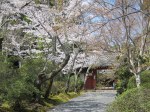
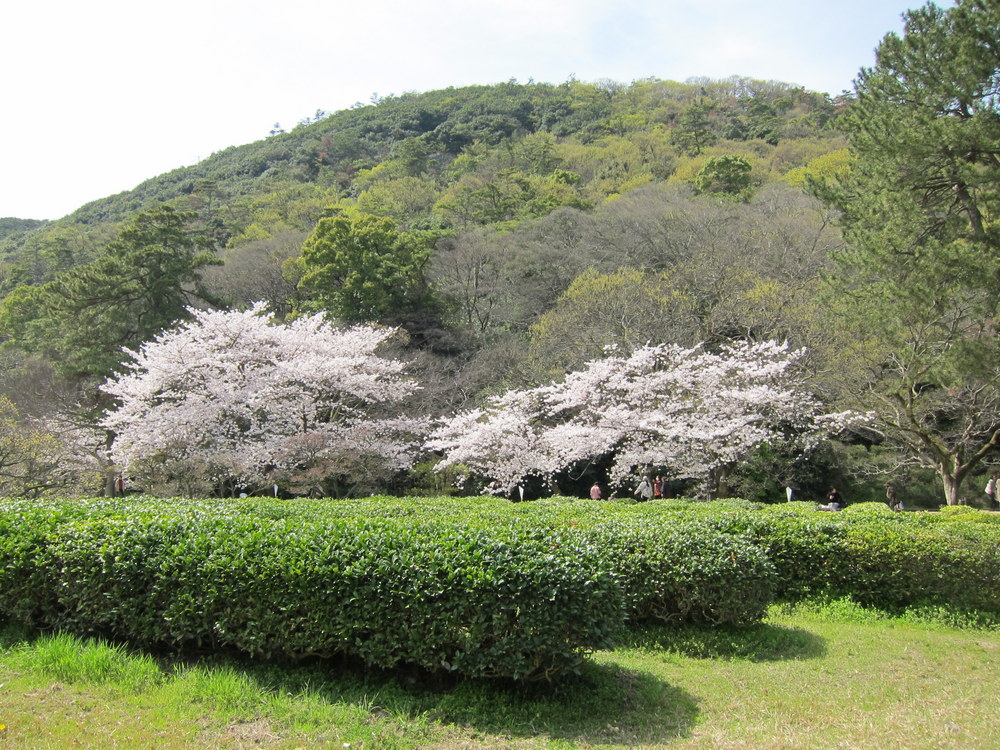
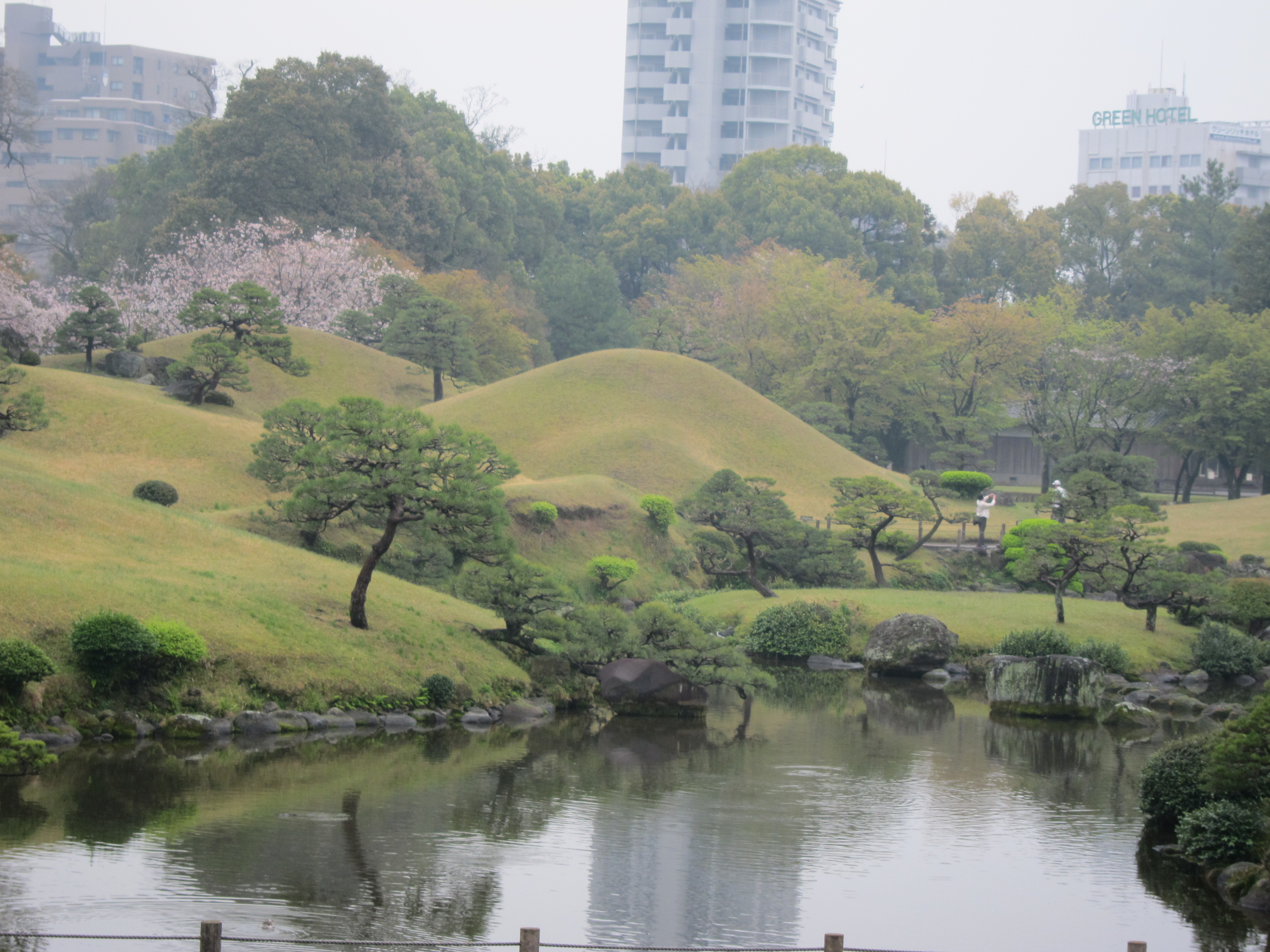
Getting back to yesterday, it was another beautiful day and I took myself off to revisit Taizo-in, another of my favorite gardens. I arrived to find traffic cops in front of the temple complex: not a good sign. Temples are usually quiet, sleepy places in no need of traffic direction. Taizo-in was having a special opening to show off its cherry blossoms and I arrived with what seemed like hundreds of Japanese all armed with cameras. I’m not about to tell you cameras are bad, but all these people needed to take pictures of their wives/girlfriends in front of the weeping cherry just as you enter. Made for quite a backup.

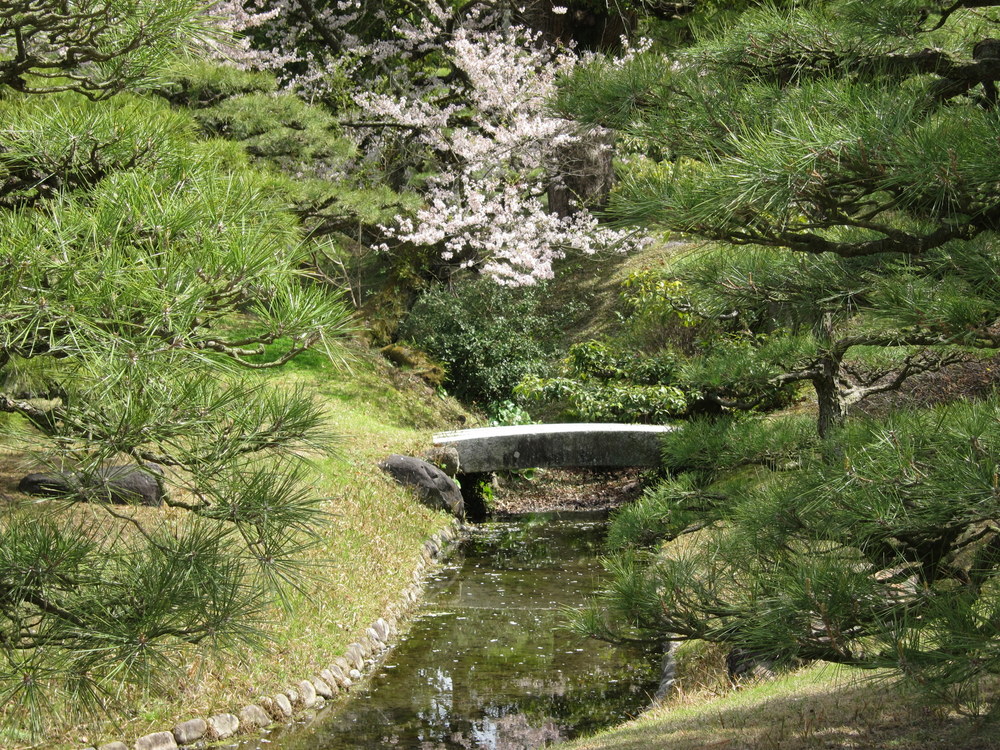
I wandered through, more than a little disappointed with the crowds and suddenly they abated and I was able to sit and enjoy most of the garden. The cherry blossoms focus attention to different viewpoints than did the red maple leaves.

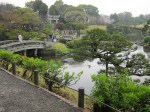
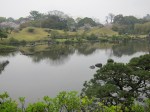
Sento Palace is part of the Kyoto Imperial Palace. Tours have to be arranged in advance, which I did on Monday. You don’t get to see inside the palace, which was created for retired emperors. The tour took us around the garden, not as great as the garden inside the Imperial Palace walls, but very nice, indeed. There were about 50 of us on the tour and we had a guide who spoke only in Japanese, so I was able to ignore her, and a keeper who remained at the back of the group to make sure no one stayed behind. At one point we had to cross a small stream by walking on rocks and I couldn’t do it. He saw my distress and motioned me to wait, then helped me get across. Very nice.

After all that I got on a bus and went to the main shopping area, to another of those covered arcades, Nishiki Market, filled with food shops. Most of it did not interest me: too much preserved, pickled and salty stuff. One place was selling salads and prepared foods. I thought I saw brussel sprouts and got very excited. I bought a small container and also a piece of eggplant. The eggplant was OK; more sauce on it than I like, but the brussel sprouts weren’t. I don’t know what they were, but they weren’t vegetables. Something made into small balls and covered with another unidentifiable green sauce. Sometimes I don’t see so well, or maybe it was because I wanted them to be vegetable.

The hotel offers free Japanese language lessons 2 evenings a week and I’ve been taking them. I am not learning many new words, but I’ve been able to ask questions about many of the mystery things. I found out, for instance, the green stuff I’ve been eating is not spinach, but a different green called komastuna, which has similar properties to spinach and can be eaten raw or cooked. Now I can look for it raw, which I would prefer.

I don’t have time to add pictures this morning. I have to get out of here, but I’ll get back to it later. Now I am off to Koyasan, a mountain filled with Buddhist temples, where I will sleep on the floor again and have two, entirely vegetarian meals.
April 8: One new garden and two I didn’t see

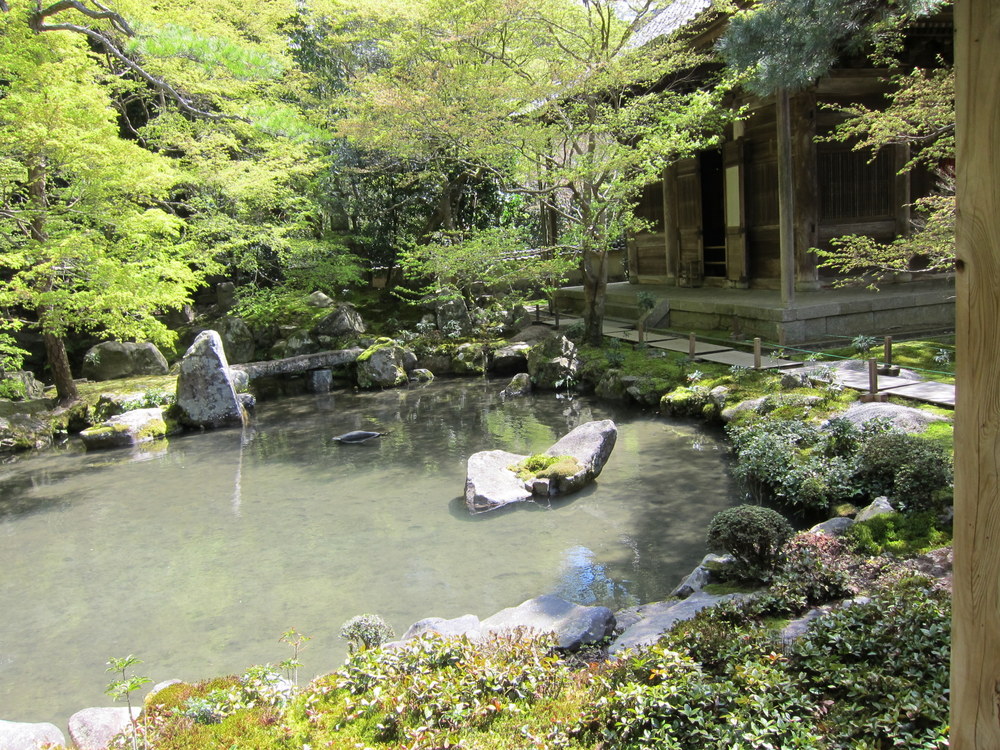
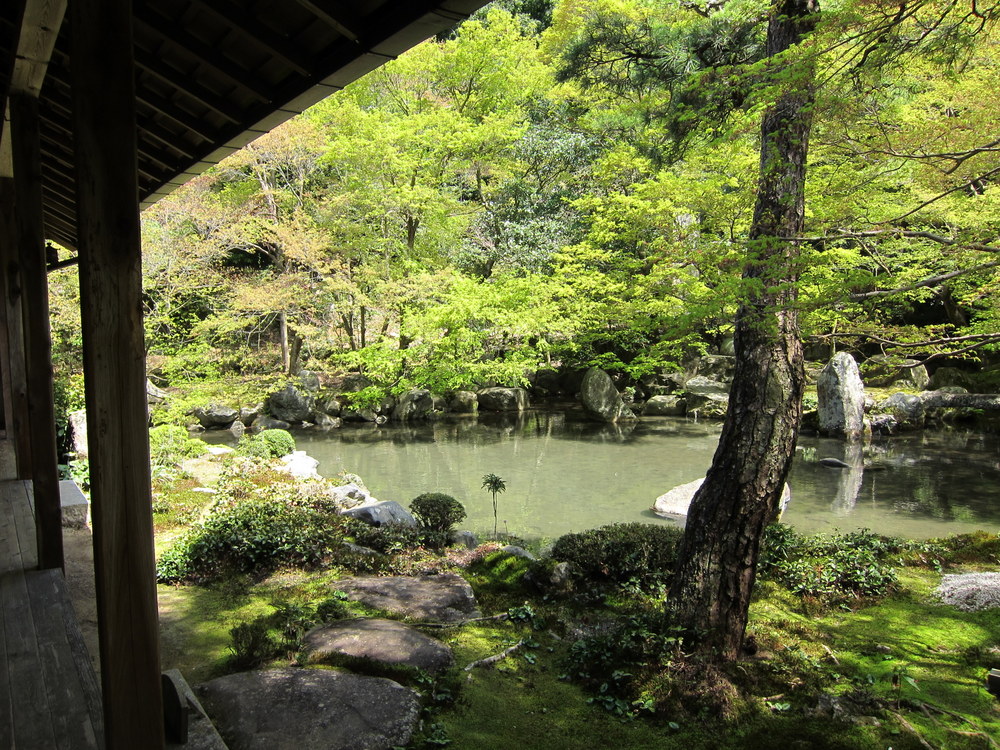
Beautiful sunshine and cool; just the way I like it. I still haven’t made a real plan for Kyoto, and maybe never will. Just doing whatever comes to mind. So I decided to go to Rengeji, a temple that’s almost into the mountains north of Kyoto. I took two buses and a train, then started walking. This was another one of these ‘on faith’ trips. A sign at the train station said it was 350 meters across the bridge. It never said which fork in the road. I asked five people about the temple before I found someone who knew it. Not a good sign.

I was going there because my artist friend, Jacqueline, told me about it and sent me a wonderful video with pictures of the garden. Frommer’s said it was small, but elegant. It was small and maybe I don’t understand what elegant means. I have to look at the video again. Maybe I was in the wrong place, or maybe pictures do lie.

IMG_4863

IMG_4865

Going to the train station I noticed a large temple with interesting trees showing above the walls. I decided to walk back that way when I returned. As I was walking I passed the Falafel Garden, a genuine Israeli restaurant here in Kyoto. Lunch was a wonderful, vegan experience. Then on to the temple, but I never found an entrance. However, they are supposed to have a crafts market next week. I’ll try again.
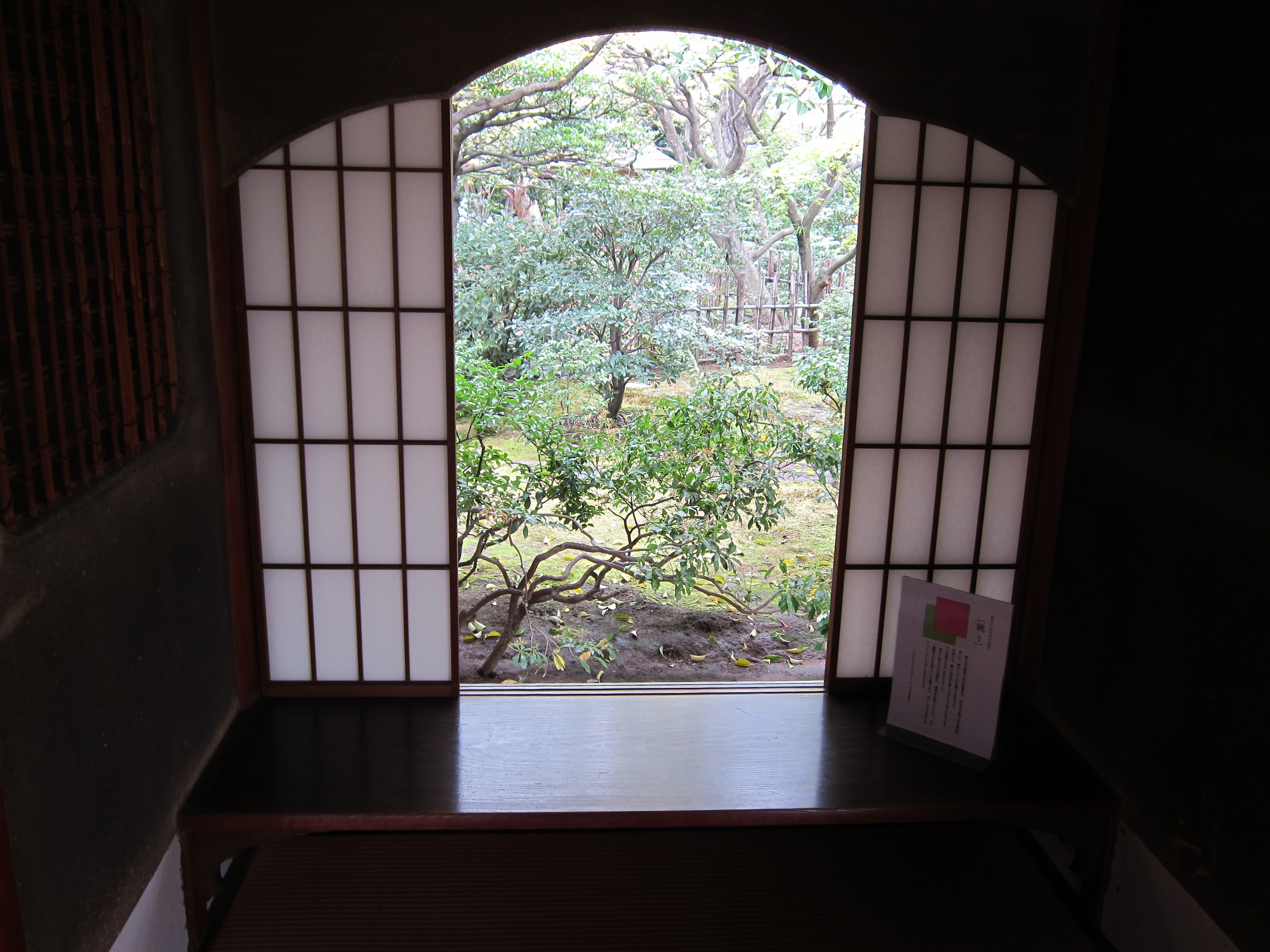
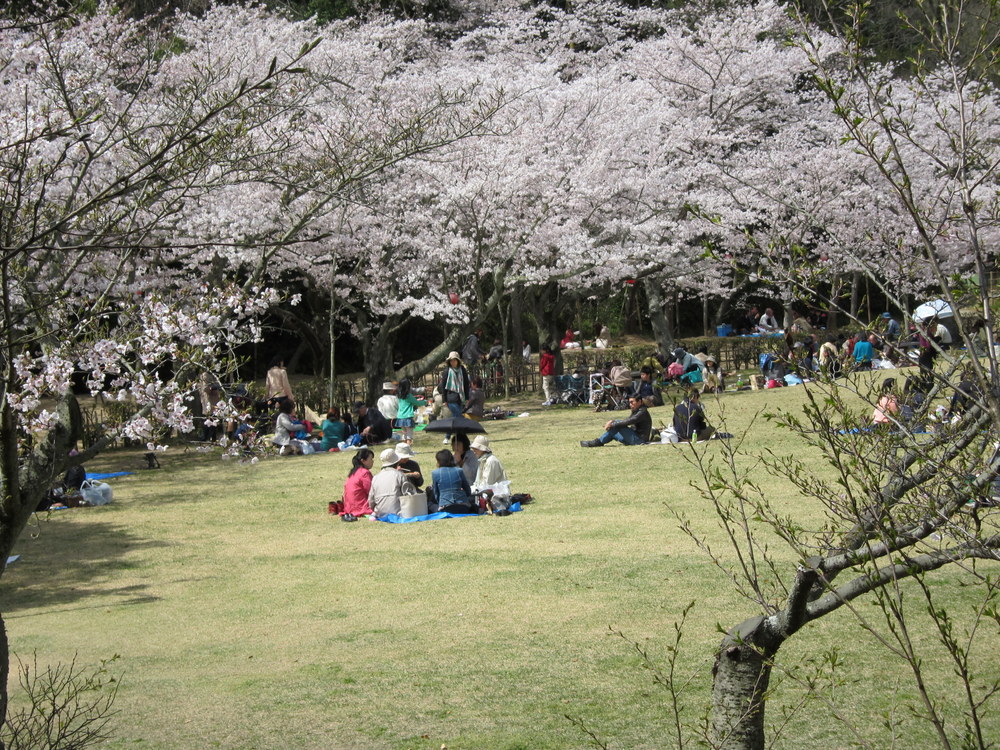
Back on the bus this time to Shokoku-ji. Visitors could go to their museum and three of their other buildings, but the garden with the wall around it was closed. Thoroughly disappointed I walked back to the Imperial Palace and sat and watched other people picnicing under the cherry blossoms. Then I arranged for a tour of the Sento Palace garden (next post).
IMG_4871

After a nice rest back at the hotel I went foraging for dinner: inari sushi again and some salad.

April 7: More rain and cold

This Sunday is flea market day at Toji Temple and I wasn’t going to let a little rain or cold stop me. Second to gardens and art museums I love flea markets. Dressing in my heaviest clothing (whatever I hadn’t abandoned in Chicago) I set out but didn’t get far, at first.

The hotel has several small temples and/or shrines nearby. When the palace has its open house these temples are also publicly active. One has a bazaar. I stopped in during my last trip and had coffee and a sweet. This time I walked through and found something I had been looking for: a small bag I could put extra things in when I ran out of pockets. One of the tables had such bags, and I was told the vendor’s mother made the bags. It wasn’t exactly what I wanted but it was so beautifully made with a wonderful polished cotton fabric, I couldn’t resist. For 1500 yen I have a beautiful, handmade bag and a picture of the maker. Of course all of this ended in a great love fest of picture taking.

With the artist who made my new bag

With the artist who made my new bag

Next a long bus ride to Toji Temple where I immediately sought shelter from the rain and a cup of coffee, which turned out to be amazingly good. I certainly would not have gotten anything like it in similar circumstances at home. I walked all around the market and around several of the subtemples that had never been open on my previous visits. One of the buildings had an exhibit of indigo dyed textiles, some made into kimonos, some wall hangings. All were beautifully painted, not the usual tie-dyed technique. I wish I knew more about how it was done. Also wish I could afford a kimono. There were scarves for sale for 8000 yen; I didn’t ask the price of the kimonos.

IMG_4835

One of the subtemples of Tofukuji

After that, a short bus ride to Tofukuji Temple. There seem to be no signs directing you from the bus stop. Another temple, near the stop, had a sign that said: this is not Tofukuji, no public entry, but didn’t tell where to go. From the map and from my previous visit I recalled a long walk down a small, unmarked street. That’s not unusual. One has to have faith here. I got to a fork in the road and didn’t know where to go. A lot of signs in Japanese pointed in one direction, but that could have been for the local souvenir shop.

He looks just like some of my wealthy relatives from when I was a child.

He looks just like some of my wealthy relatives from when I was a child.

I stopped a marvelously, well-dressed, older couple and asked directions. They were charming and, even without a common language, they insisted on accompanying me. After determining I was alone and from the US, we had no conversation. When we got to the temple they insisted on helping me up some very high steps to see the ceiling of one of the prayer halls where there was a dimly lit, difficult to see dragon. They also had to help me down. My knees are not functioning well, even though I keep scolding them.

Tofukuji is famous for this lawn.

Tofukuji is famous for this lawn.

I have already mentioned I like being alone on these visits. This time I was also desperate for a toilet and the wind had blown something into my left eye, which I could barely keep open, and when this happens, instead of producing lots of tears that would have removed the dirt, my nose runs. It wouldn’t stop, and I was running out of tissues.

The man walked ahead and bought 3 passes to enter the temple proper, even though I said no. He didn’t hear. I did not know how to get out of this. We finished the temple and she said: “My home.” At least I think that’s what she was saying. And they started walking out continuing to say “My home” and gesturing like she wanted me to follow. Was I being invited to their home, me, my runny nose, not very sharp looking clothing? I kept saying yes, but I didn’t know what I was saying yes to. Finally we stopped another couple, a Japanese man and a /Western woman. He was able to translate and told me they just wanted to go home and leave me at the temple. I was very grateful I felt like he saved my life. Finally I could go and find the toilet.

IMG_4856

Happily spent more time alone in the garden musing over the kinds of craziness you can get into without a common language.

April 5: Three lovely gardens and one mistake

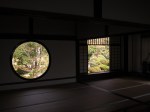
On a day of warmth and sunshine I started out for three temples, all located at the foot of the mountains on the northern border of Kyoto. As none of these temples are well known or well publicized they were peaceful and wonderful with only a few other people visiting with me. At the first, Genko-an, I was welcomed with  lovely incense indoors and the fragrance of the blossoms outdoors. The temple is noted for its two windows, one square, the Window of Delusion, implying confusion, ignorance and immaturity; a life of human suffering; and one round, implying Zen maturity, completeness and enlightenment.

Koetsu-ji is a special temple built on land owned by the family of Hon-ami Koetsu, a famous calligrapher, who created an artist and craftsman’s village on surrounding land during the 17th century. Several tea houses are on the grounds along with monuments for the Hon-ami family. Another lovely, peaceful visit with the fragrance of the blossoms stirring my consciousness.

Josho-ji, connected to the Hom-ami family, was also welcoming with peace, quiet, lovely incense and fragrant blossoms and a large, beautiful garden.


Since it was early afternoon I got on the bus and went to Kinkakuji, the golden temple. It was a miserable experience when I was there in 2007 because of the hordes of people visiting with me. I had not intended to return, but I have been reading Yukio Mishima’s, 1959 book, The Temple of the Golden Pavilion, I found in the library here in the hotel. I guess that was the motivation. It was another miserable experience; more people and I am five years older and tire and lose patience more easily. I should have known better.

April 3 and 4: Imperial Palace and Daitokuji

This slideshow requires JavaScript.

I arrived at Kyoto Station to absolute chaos; crowds of people milling around in every direction clearly not knowing where to go. These were Western crowds; Japanese crowds always have a direction. I couldn’t remember exactly where to go but finally found the tourist office and armed with maps figured out which subway to take and got out of there.

It was not a nice day: chilly and threatening rain that never came. I left my suitcase at the hotel and went for a long walk, finally stopping for lunch in a Thai restaurant. More walking, stopping at a kind of supermarket and picking up some stuff for dinner, then walking back to the hotel through the gardens of the Imperial Palace which are open all the time and even include a children’s playground.

I am staying, as I have on my previous trips, at the Palace Side Hotel, across the street from the Imperial Palace. It’s inexpensive, pleasant and the staff is always helpful and wonderful. They also have laundry and kitchen facilities and a small, guest contributed library. It has a lovely, communal feel to it; not so hotely. The only thing I would change is the restaurant, which is expensive and the last time I tried it, not very good. I would love to be able to eat there but I settle for supermarket stuff in my room.

April 4 brought full sunshine and the opportunity to attend an open house to inside the walls of the Imperial Palace. I did this once before and I’m not interested in the palace itself, but wanted to see the gardens again. There are gardens inside and outside the walls. The entire property is 700 meters wide by 1300 meters long.

Hoping that by coming early I would avoid the crowds I arrived at ten to nine to find a huge crowd already lined up. I waited, they let everyone in and I walked through to the gardens. There are two of them: a wonderful,  private garden for the emperor and next to it a wonderful, more public facility. Public in this case means royal family or visitors.

Too many people to really enjoy. I took some pictures but I’ll try to get back again. The open house lasts until April 8. Maybe there will be fewer people if I come toward the end of the day. Also the sun will be in a better position. I was having a hard time seeing what I was actually photographing and I am amazed I got anything. That little camera is great.

Taking a bus and subway I went on to Daitokuji, a large, important  temple complex north of the palace where I visited gardens in a couple of the subtemples. There is no cherry-tree viewing here so it was peaceful and pleasant. The gardens were not exceptional but I enjoyed them.

I couldn’t figure out how to get to two of the subtemples and finally decided I had enough. Walking south through a lovely, residential area I came to a shrine with beautiful cherry blossoms and found a place called Art Space CASAne with some tiny books in the window I might have bought had she been open. Now I might have to make my own.

A short bus ride brought me to another supermarket where I bought two oranges, strawberries, some cut pineapple, tomatoes, cooked lotus root, (I make it better) and inari sushi, which is not fish but rice in a tofu skin wrapper. All vegetarian.

April 1 and 2: Ritsurin and Tokoen

April 1

The weather forecast for April 1 and 2 showed first a beautiful day and the second as rainy. With this in mind I put my bag in a locker at the Okayama station and got on the train to visit Ritsurin Park. This is another re-visit. Ritsurin is known as one of the largest and most beautiful parks in Japan, but that wasn’t my impression on my first visit, on December 2, 2008. In fact, this was probably the day I decided to change my return flight and leave early. There didn’t seem to be any reason to stay and look at winter-dreary gardens. Four years and four months later I found the garden beautiful and spent hours walking around. I entered near a field of blossoming cherry trees and families picnicking on the lawn, one of several such celebrations of spring.

Celebrating Spring and cherry blossoms

Celebrating Spring and cherry blossoms

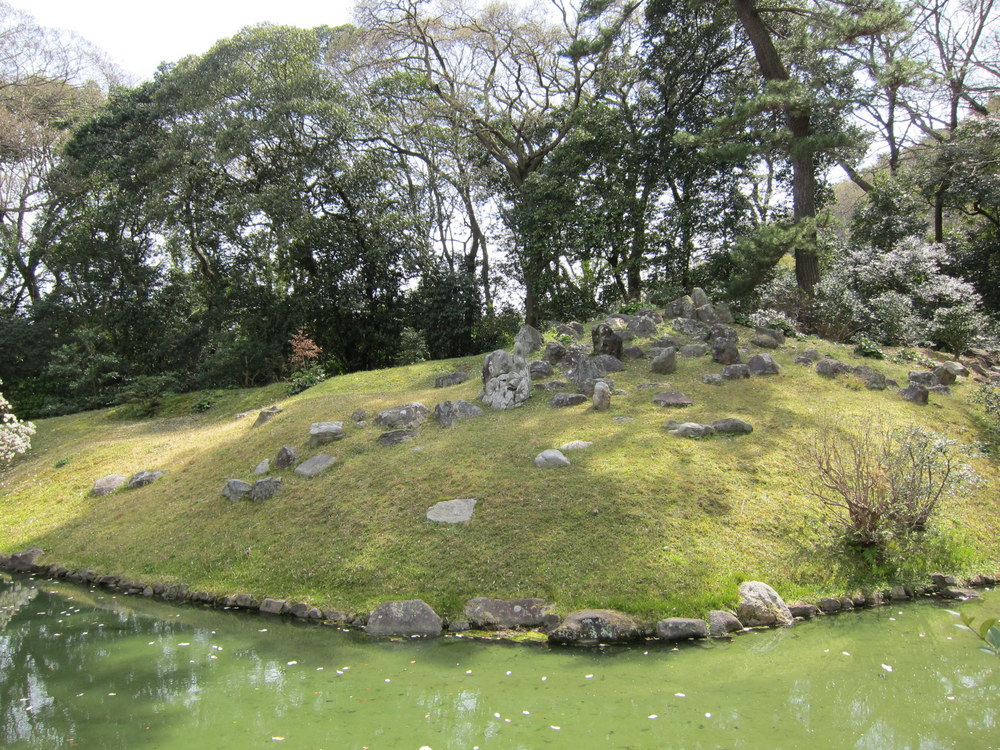
According to the brochure the park dates back to the early 16th C. when the lord of Sanuki, Ikoma Takatoshi, commissioned the construction of a garden around South Pond with Mt. Shiun as a backdrop. Successive lords made extensions and improvements until the park was completed in 1745, during the reign of the fifth lord, Yoritaka. In 2003, the park was designated a special beauty spot. One place, called the Shofuda, differs from other rock arrangements and is thought to be one used around the year 1400, probably indicating the place where the present park originated.

Shofuda

Shofuda

Another one of those trees that get me

Another one of those trees that get me

Gray Heron

Gray Heron

Mt. Shuin as borrowed scenery

Mt. Shuin as borrowed scenery

More borrowed scenery

Cherry blossoms everywhere

April 2 rained, as forecast. I remained in the hotel until about 10 am with no pressing need to go anywhere and tired after nine hours of sleep. Outside, I found the rain warm and gentle with no wind. It was not unpleasant. First thing, I went shopping. My camera seems to be draining batteries at an unprecedented rate, possibly because I am taking so many pictures, or possibly because the batteries are getting old. I decided another battery might be a good thing. I went to Bic Camera, a combination of camera, computer and large appliance store with a bit of Costco thrown in. Getting another battery was easy; I just showed them what I had, even managing to get the cheaper knock-off, not the genuine Canon brand.

I decided a museum was the best place on a rainy day and started walking. Not too far along I stopped at Mr. Donut for a surprisingly good cup of coffee and a totally forgettable donut. Fortified, map in hand, I started walking in earnest. Maps are only partially helpful since often there are no street names on the street, or on the map, or the names are not the same. Also, having had previous experience with Japanese maps I am never confident about which way is north, not that I necessarily know which way is north anyhow. So, of course, I turned down the wrong street and walked a considerable distance before stopping and getting directions. Retracing my steps, then going further down another street I came to the Okayama Orient Museum; orient, in this case meaning middle east. They had some lovely stuff, but more important, they were wonderful to me, even taking my wet jacket and hanging it up.

They gave me an Android tablet with info about some of the exhibits. As is so often the case it never told me what I wanted to know. There was an exhibit of beautiful mosaics, similar to things I had seen in Israel, but no information except a map indicating it had come from somewhere around there. I found someone who could read the Japanese and she said they came from Syria. More than that, I never found out.

Nearby, the Prefectural Art Museum had some moderately interesting Japanese art, from the collection of a patron. As with many American museums there was a strong focus on the collector and I found out more about him than I did about the individual work.

The rain had moderated to a light drizzle when I left the museum so I boarded a tram and went to another garden, Tokoen. I knew nothing about it when I entered and no one was there; I just happened to find it on the map. It’s a lovely, small garden built around a pond. I enjoyed the peace and quiet of it in spite of the rain.

Later, I found on the internet, it had been built earlier than Korokuen, the large Okayama garden, as a private villa for relaxation by Tadakatsu Ikeda, head of the Ikeda clan that once ruled over southern portion of Okayama Prefecture. It is now privately owned and costs 400 yen to enter. Because of the rain no one was there to collect. I did feel like I was sneaking in, the way I felt at Yusentei. This is a picture of the sign. If anyone can translate for me, I would appreciate it.

sign

I took the tram back to the train station (my hotel was nearby) and went looking for green stuff to eat. Finally found something I hope was spinach and another tiny salad with lettuce, avocado, a tiny bit of tomato and silken tofu. It came with a tiny bottle of salad dressing. Each of these salads weighed about 100 grams, about three and a half ounces, and cost about $4 each. Green stuff is hard to come by. Earlier, for lunch, I had a nice size bowl of rice flavored with thinly sliced beef (I’ve given up vegetarianism while I’m here), for the same amount of money as one of the salads..

This slideshow requires JavaScript.

March 31: Review from a moving train

IMG_4432

Moving again, this time back to Okayama for two nights then on to Kyoto where I will remain for most of the rest of the trip. I must admit I am getting tired of all this wandering.

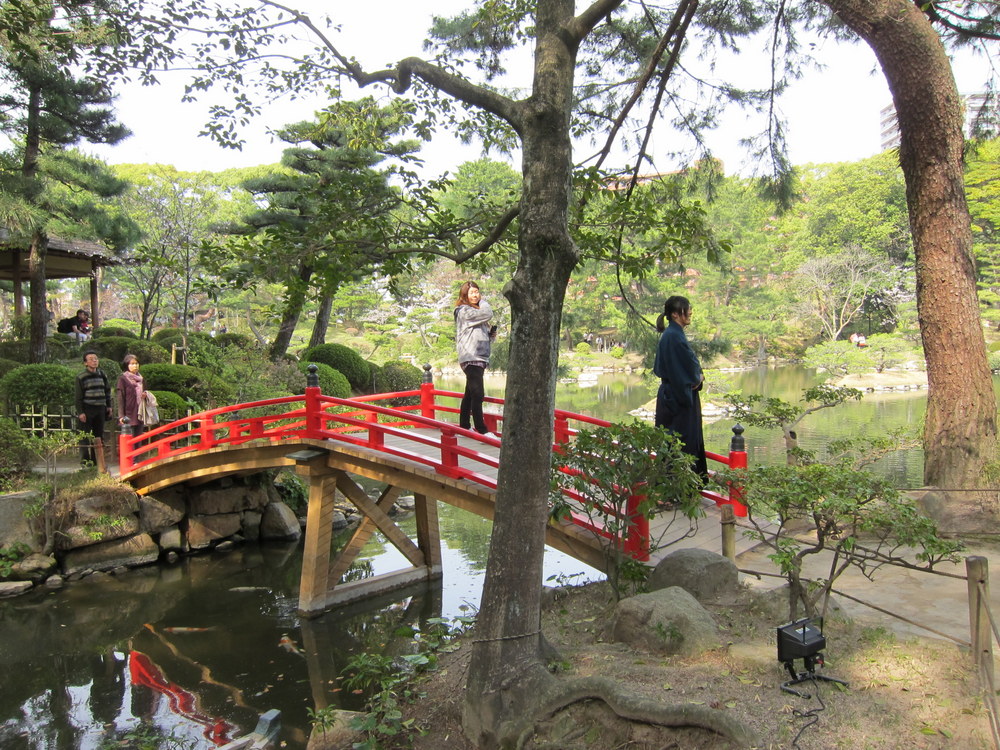
I came to Hiroshima to see only one garden, Shukkeien, which I got to on the day I arrived. It was very crowded, being Saturday and being filled with cherry blossoms. When I walked in I unfortunately picked up a volunteer guide who thought he spoke English. I tried several times to politely get rid of him with no success. Finally, after walking around for some time, I pleaded the need to sit down and was able to tell him I could manage by myself. I realize I like being by myself in a place where I want to absorb my surroundings and to photograph.

IMG_4450

Traveling around, looking at gardens outside of major urban centers or temples, I have come to realize how much history these gardens encompass. I knew the concept of creating a garden was very old. But I never thought about their importance as part of Japanese history. The gardens I have been looking at, outside of Kyoto, were created by or for the overlord (daimyo) of the area, used for his entertainment and increased his prestige. I think it might be possible to do a history of Japan based on the creation of gardens.

IMG_4415

I don’t know what I had in mind when I decided to spend two nights in Hiroshima, but none of the day trips appealed to me yesterday, so I walked back to Shukkeien, arriving just as it opened, and managed to walk around for another hour, sans crowds and English guide. According to the brochure, the name  “literally ‘shrink scenery garden’ expresses the idea of collecting and miniaturizing many scenic views, and according to tradition it is a miniaturized landscape modeled on Xihu (West Lake) in Hangzhou, China.

IMG_4427

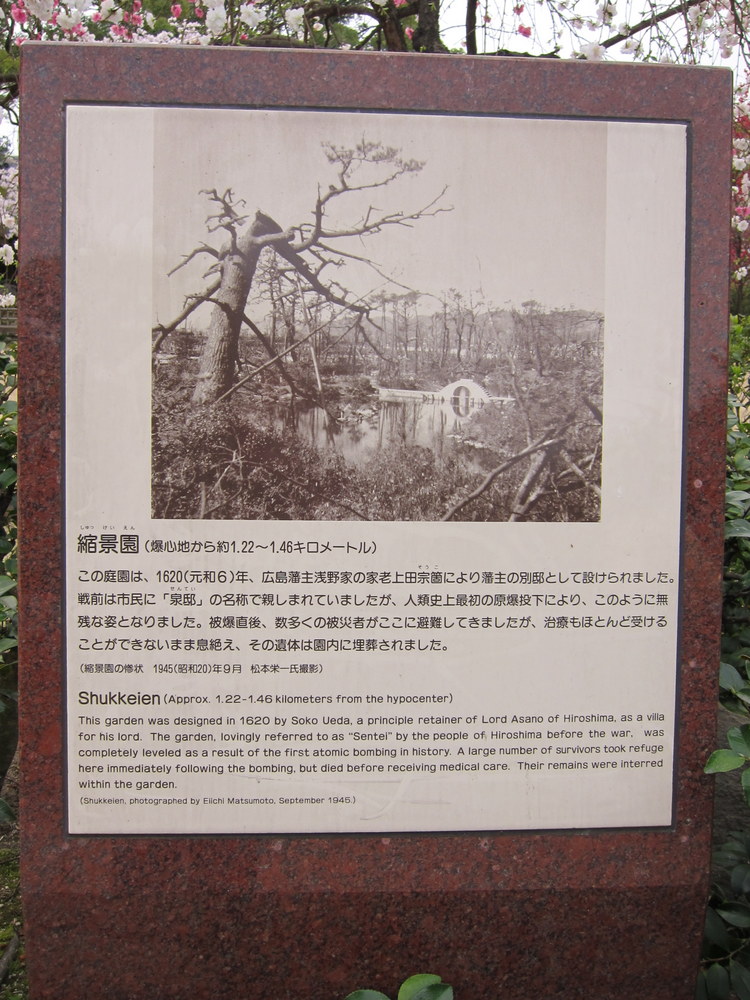
The garden was destroyed by the A bomb, with the exception of this stone bridge.

IMG_4405

Many of the people who were severely wounded by the bomb sought refuge in the garden but no medical help arrived. Their bodies were interred beneath the garden.

IMG_4435

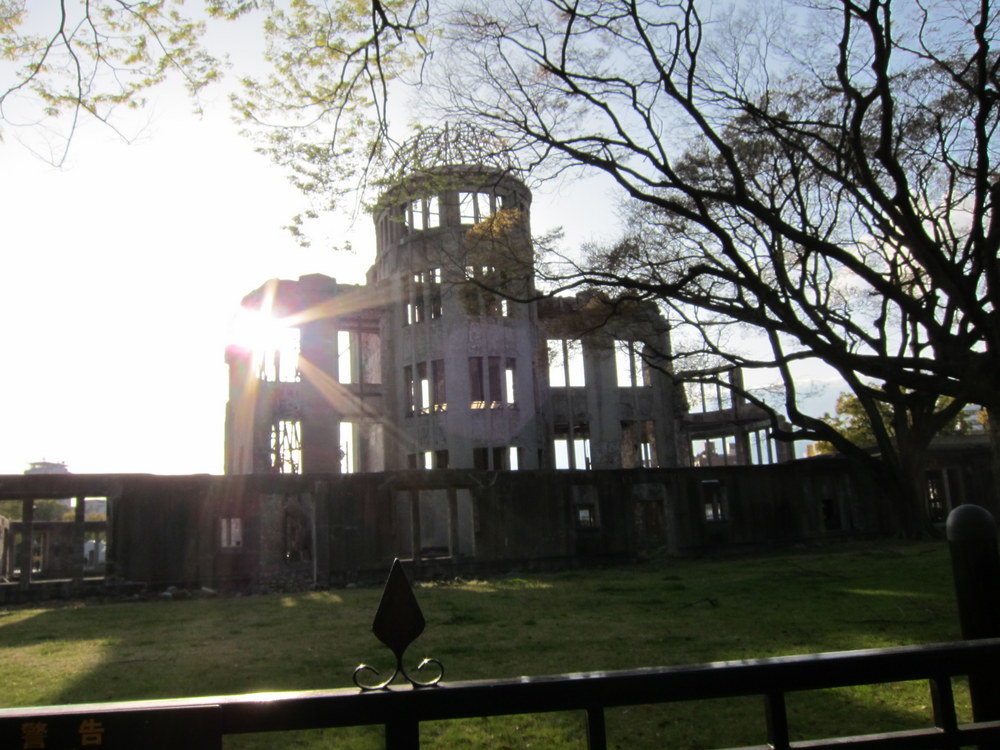
I find Hiroshima very difficult. I cannot stop thinking about what happened here, even though it is now a beautiful, modern city whose population seems no different than any other large urban area.

A-bomb dome. Remains as a memorial.

A-bomb dome. Remains as a memorial.

After the garden I visited the Prefectural Art Museum where I was hoping to see crafts done by famous artists, but as is so often the case, very little was on display. I was able to see some interesting contemporary art by Hiroshima artists.

I went back to the hotel to decide what to do next, and eventually went for a long walk in the downtown shopping area. Besides the large department stores that still seem to thrive here there are many covered arcades; just a covered street with no vehicular traffic and shops on both sides. These places are always crowded and seem to thrive. How is it that our attempts at creating such arcades have never succeeded? I seem to have more questions than answers.

March 29 and March 30

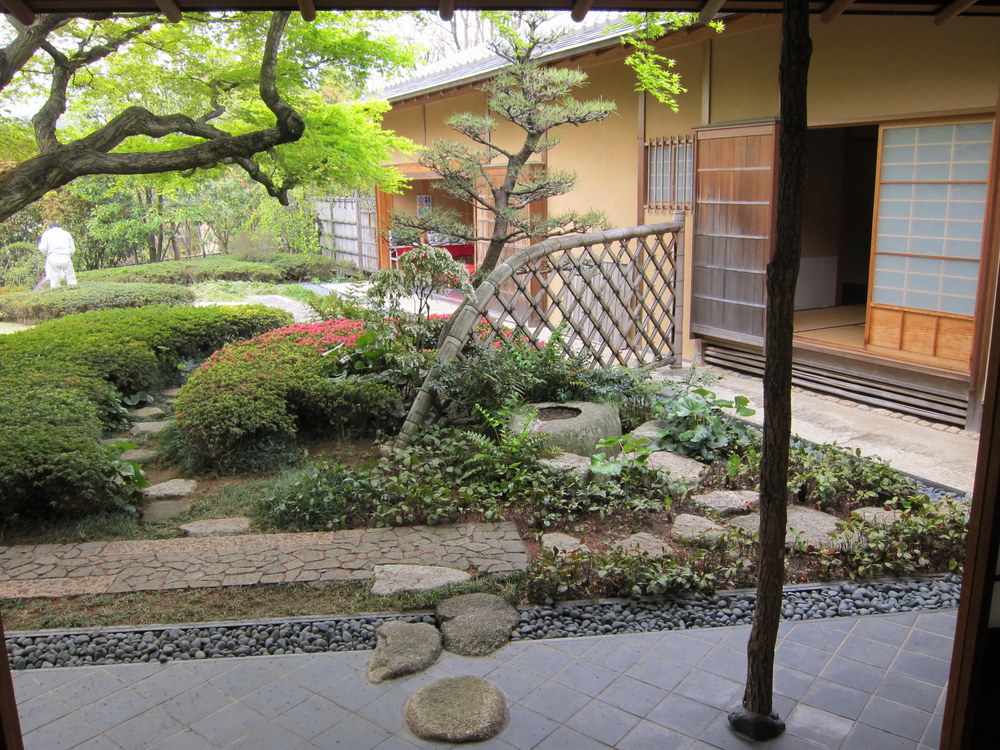
Went from very warm yesterday to quite chilly today. I went back to Fukuoka for one more try at Yusentei. First I went to Shofuen, the garden that was closed on Tuesday. It is a small garden in an upscale residential area, built originally as a tea house garden, then taken over by the city. It was an uphill walk from the bus stop and then a steep set of stairs. However the wonderful thing about municipally run enterprises is they often consider people like me and put in an elevator, actually enhancing the experience. Instead of seeing the garden in bits and pieces as you clamber up the stairs it opens to you all at once when the elevator door opens.

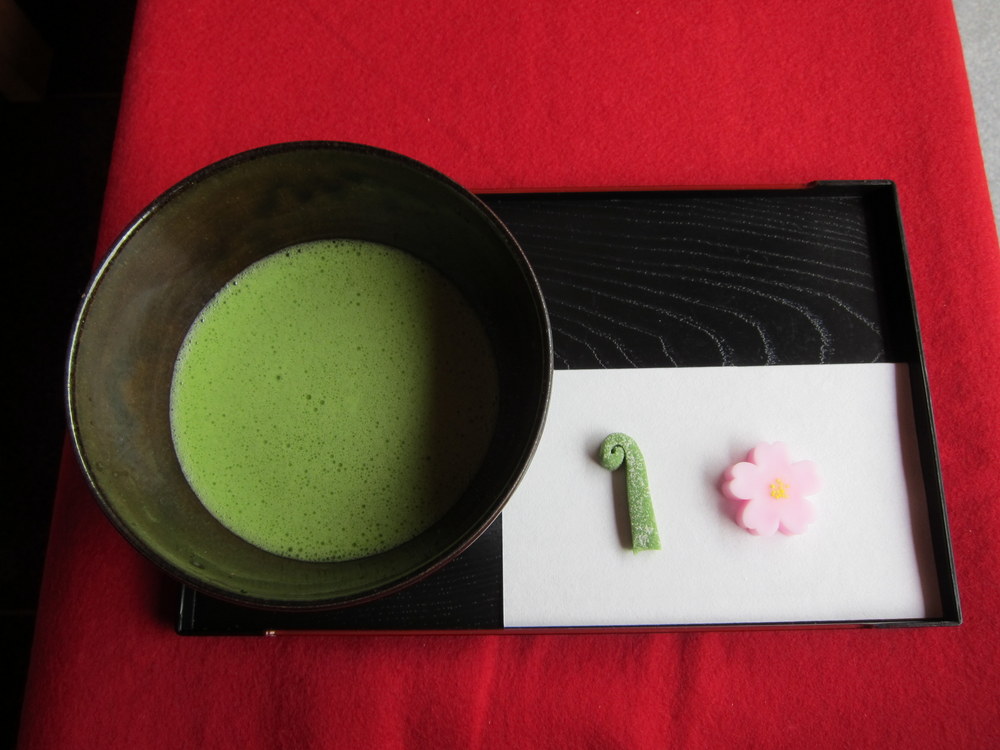
Frothy, powdered green tea with sweets. Note the pink sakura

Frothy, powdered green tea with sweets. Note the pink sakura

It was noon by the time I arrived and climbing up the hill had tired me, so for the first time, I accepted a bowl of green tea and a sweet, which I was able to eat while sitting on a bench and viewing part of the garden. It was a lovely experience I will probably never repeat but it was nice to try it once.

IMG_4360

80 year old maple tree in the center of the garden

After I felt restored I walked around the garden and the teahouse.

IMG_4365

IMG_4366

Before I began this visit I got detailed instructions for Shofuen and Yustentei from the information desk at the train station. Actually not detailed enough, but I was able to figure out details like which direction I should go on the bus. Two buses and help from passersby I got to Yusentei only to find it closed. This time there was a long letter on the door, I think, explaining the closure, which will probably last for months. I can’t read the writing but I recognize dates. Giving up, I got back on the bus then took the subway back to the train to Kumamoto.

March 30

On the train again, this time heading back toward Kyoto with stops at Hiroshima and Okayama. I can’t believe I have been here two weeks already and have only a few more days of travel before I settle down for most of the remaining three weeks. I shipped my bag directly to Kyoto, taking enough underwear and medications for the next four days. Interesting what becomes important as you grow older.

Had a great day in Shukkeien garden here in Hiroshima. I’ll write about it tomorrow or Monday when I’m on the train again. The rest of this post was written on my way here.

Some casual observations.

Alice, sometimes you must read my mind. I don’t remember writing about how clean it is here, but I think about it. You seldom see papers or plastic bags or anything on the ground. And unlike our cities you don’t see trash containers on every corner. I have walked around all day with junk in my pocket and no place to get rid of it. Every small purchase earns you a receipt. I have learned you don’t have to take them. Then it’s up to the giver to dispose of it. This year smokers seem to be largely confined to smoking areas with cigarette disposal containers. Mostly there aren’t even cigarette butts on the ground.

Besides the receipts, the other nuisance here is the one yen coin. Like our pennies they are mostly useless except in supermarkets where they make you think you are getting a bargain if they take 2 yen off. I now have a pocketful of one yen coins that I save for my supermarket purchases.

One of the wonderful things here is that buses and trams all have change-making machines. They expect you to pay the fare in exact change, but you can use the change machines to break even a 1000 yen bill. All lower denominations are in coins, including the equivalent of $1 and $5. In New York, if you don’t have a Metro card, you have to walk around with a pocket full of change or beg other passengers to help you break dollar bills.

I’m in another largish hotel room with a slightly larger bathroom and I’m getting ready to try out the bed.

March 28: Kagoshima

Day trip to Kagoshima, the southernmost city in Kyushu. Today is dry and warm, probably warmer than I like. Kagoshima has a  a garden, Sengan en, which they say, uses the bay and volcano for borrowed scenery. This one was easy. Got the train and the bus, going and coming, with no trouble and very little waiting. The garden is on a small mountain, I think 650 meters high. The lowest part is filled with restaurants and shopping. The actual garden is off to one side of the shops and I missed it. I was annoyed with all the commerce and I started instead to climb toward the peak.

As you climb the vegetation becomes more wild. It was lovely, but hardly what I would call a garden. I never got to the top, too much climbing on steep rocky stairs. I went up a short way and had trouble getting back down. I hate stairs, did I tell you that? I saw some photos and the area at the top looks like a manicured lawn, a viewpoint for the bay and the volcano.

I met a man coming down from the top and he advised me not to go. Said the steps were very steep. I was happy to take his advice. I think he is the man of my dreams and he will remain only in my dreams since I don’t even know his name. He is British, a mountain climber, going around the world climbing mountains and looking at volcanoes. He is nice looking, has a lovely voice and a polished accent. I expressed some surprise about the amount of time he was taking for this round the world trip and he told me he was 70, retired with a pension and had rented out his house. I was certain he was more like 60 and was with some kind of video or film crew making travel films. He had the looks and the voice for it. This is clearly the guy I want: great shape, interested in everything. Too bad he climbs mountains. That and parachute jumping are among the few experiences I am not willing to try.

My suitcase, filled with dirty laundry was waiting for me when I returned to the hotel. So, back to the mundane; you know what I did all evening.

March 27: Kumamoto

I liked Fukuoka and I’m sorry I didn’t schedule more time there. Today was my day to move again, but just 45 minutes down the train track. It rained most of the day, a light, drizzly kind of rain with a comfortable temperature. I checked in to the new hotel, which wouldn’t let me get into the room until 3 pm. That is the rule.

I particularly wanted to see one garden here: Suizenji koen, and decided to go there, rain or no. The first sight of the park is jaw dropping. When I get back to my other computer I’ll try to put together the photos above to show the entire first view. That said, I probably liked this park less than most of the others I’ve seen. Too many fake mountains, which are supposed to represent the 53 stations of the Tokaido Road.

IMG_4301

Many gardens represent scenery from far away places (in Japan or, occasionally China). Travel was a hardship so the wealthy could dream of travel in their gardens (and also compose poems about these famous places). This garden was begun as a tea garden by the feudal lord of the area in 1636 and took about 80 years to complete.

Monument to the two daimyos who built the garden. The woman bowed deeply to each one and stood there for a long time.

Monument to the two daimyos who built the garden. The woman bowed deeply to each one and stood there for a long time.

Never finished yesterday. So tired I was asleep by 10 and slept soundly until 4:30. then wide awake, but finally went back to sleep until 7:30.

More cherry blossoms

More cherry blossoms

On my way back to the hotel I stopped in the food department of a large department store near the tram station and bought stuff for my supper: three pieces of inari sushi, rice wrapped in a tofu skin; some dark green vegetable that might be spinach, and a container of slightly fermented cucumber, as in kimchi. I like that stuff, but inadvertently bought way too much. I’ll be eating every night here. There are vegetables, but it’s hard to find spinach, broccoli, and the other stuff I usually eat. I’m still concerned about my coumadin count, but I’m not showing any black marks yet. I guess I can always get a blood test.

After my vegetarian supper I wanted something sweet. I inquired about supermarkets and was given a map and some directions; then started walking. I found another covered walkway with lots of different kinds of shops, including something called Land of Markets that had some exotic stuff like cheese and another place called Swiss Konditorei. I’m never sure what the names mean, but this looked good. Unfortunately I had already made my purchase. Maybe I’ll go back tonight.

This is the largest hotel room I’ve had since I arrived, and it has the tiniest bathroom. Sometimes I feel like a giant here; I almost don’t fit on the toilet and getting in and out of the tub is an adventure in itself. It feels like there is no room to fall but I’m sure I could kill myself if i’m not careful.

Alice, you remarked about the efficiency of the Japanese. The trains run on time, even the buses and trams keep to a schedule. Problems arise when you don’t ask the right questions, or you don’t know what questions to ask. I asked how to get to the garden and was given exact directions. I didn’t ask if the garden was open, because my experience has been that gardens don’t close. Unlike museums, they are almost all open every day. As for information from websites I should know it isn’t reliable. But sometimes I don’t know how to ask.